

ArticleCorner — Articles, Stories and Perspective
Launched on July 19, 2026, this non-profit personal blog reflects the boundless imagination of a single mind. It is created and curated by a retired web administrator from Türkiye.
ArticleCorner.com was founded with a simple mission: to inspire reading in an age increasingly dominated by video content. Through articles, fictions, thoughts, and reflections, the platform seeks to transform ideas into words, ease the weight of everyday life, and encourage people to rediscover the value of reading, writing, and thoughtful reflection in the digital era.
Reading articles is one of the most effective ways to expand knowledge, improve critical thinking, and stay informed about the world. Every well written article introduces fresh ideas, reliable information, and valuable perspectives that help readers grow both personally and professionally.
Whether you are looking for practical knowledge, thought provoking ideas, or daily inspiration, articlecorner.com offers a growing collection of original articles designed for readers around the world. Read more, learn more, and discover ideas that matter with articlecorner.com.

Writing and Reading
The difference between a person who writes and a person who reads is not about superiority but about direction of thought and experience.
A reader receives. They enter worlds created by others, absorb ideas, and expand their understanding through existing voices. Reading is like traveling through many minds. It builds awareness, empathy, and knowledge without the pressure of creation. A reader collects meaning, compares perspectives, and grows by reflection.
A writer creates. They take silence, thoughts, emotions, and observations and turn them into form. Writing is not only expression but also discovery. Many writers do not fully know what they think until they begin to write. It is a process of shaping chaos into structure, and feelings into language. A writer gives something that did not exist before.
Yet the boundary between them is not fixed. Every writer is also a reader, and every reader carries the potential to write. Reading feeds writing, and writing deepens reading. One gathers, the other transforms.
In the end, the real difference is not in ability but in action. One listens to the world through words already made, the other answers the world by making new words.

The Importance of Reading
Have you ever noticed how quickly we consume information today? We scroll through hundreds of posts, watch short videos, and jump from one notification to another. By the end of the day, we have seen countless pieces of content, yet we struggle to remember most of them.
Reading is different.
When you read, your brain is not simply receiving information. It is actively working. Every paragraph invites you to imagine, question, compare, and understand. Instead of feeding you ready-made images, a book asks your mind to create them.
That simple difference makes reading one of the most valuable habits a person can develop.
Research also suggests that regular reading can improve vocabulary, strengthen memory, reduce stress, and help maintain cognitive health throughout life.
Think about the last great story you read. Chances are you still remember the characters, the emotions, or even a sentence that stayed with you. A good book has a remarkable way of becoming part of your own experiences. Even though the events happened only on paper, they often leave real memories behind.
Reading also teaches patience. Unlike endless social media feeds that reward us every few seconds with something new, books encourage us to slow down. They remind us that understanding something meaningful takes time. The reward comes gradually, chapter by chapter, and that process strengthens our ability to focus in a world filled with distractions.
Another beautiful thing about reading is that it introduces us to people we may never meet. Through biographies, novels, history, or science, we experience different cultures, opinions, successes, and failures. We begin to understand that the world is much larger than our daily routine. This wider perspective often makes us more open-minded and empathetic toward others.
Many people believe reading is only about gaining knowledge. That is certainly true, but it is only part of the story. Sometimes the greatest value of a book is not a fact you learn but an idea that changes the way you think. One sentence can inspire a new goal. One chapter can encourage a difficult decision. One story can remind you that someone else has faced the same struggles and found a way forward.
Reading is also one of the best ways to improve communication. The more you read, the more naturally you recognize well-structured ideas, expressive vocabulary, and clear storytelling. Over time, these qualities quietly become part of your own writing and speaking. You may not even notice the change until someone tells you that you explain things more clearly than before.
The wonderful part is that there is no perfect book to begin with. Some people enjoy fiction, others prefer history, psychology, travel, science, or personal stories. The best book is simply the one that makes you want to turn the next page. Once curiosity takes over, reading stops feeling like a task and starts becoming a habit.
You do not need to read hundreds of pages every day. Even ten or fifteen minutes can make a difference. Those small daily moments slowly build knowledge, imagination, confidence, and concentration. Just as exercise strengthens the body, reading quietly strengthens the mind.
In a world where almost everyone is trying to capture your attention for a few seconds, reading gives something much more valuable. It gives your attention back to you.

Why Writing Can Be a Form of Therapy
Most people think writing is something authors, journalists, or students do.
In reality, writing is something much deeper.
Long before books were printed and stories were published, people were searching for ways to understand themselves. Some talked to friends. Some spent time alone in nature. Others prayed, reflected, or simply sat quietly with their thoughts.
Writing became another path.
A surprisingly powerful one.
Have you ever noticed how certain thoughts seem overwhelming when they stay inside your mind?
A small worry can grow larger throughout the day. A disappointment can replay itself repeatedly. An unanswered question can circle endlessly without reaching a conclusion.
The mind is a crowded place.
Thoughts arrive, collide, disappear, and return again.
Writing changes that.
The moment words move from the mind onto paper, something shifts.
The thought that felt enormous suddenly becomes visible.
Instead of carrying it everywhere, you can look at it.
Examine it.
Question it.
Sometimes the problem is not as large as it seemed.
Sometimes the answer was already there waiting to be discovered.
This is one reason writing often feels therapeutic.
Not because it magically solves every difficulty, but because it creates clarity.
Many people keep journals during difficult periods of life. Others write letters they never send. Some simply open a notebook and write whatever comes to mind.
There are no rules.
No audience.
No pressure.
Just honesty.
And honesty has a unique power.
Modern life rarely gives us opportunities to slow down and listen to ourselves. Notifications arrive constantly. Conversations move quickly. Social media encourages immediate reactions rather than thoughtful reflection.
As a result, many people spend years hearing everyone else's opinions while rarely hearing their own.
Writing changes the direction of the conversation.
For a moment, the outside world becomes quieter.
Your own voice becomes louder.
That voice may reveal fears you have ignored.
Dreams you postponed.
Questions you never allowed yourself to ask.
Or strengths you forgot you possessed.
Perhaps this is why so many writers describe writing as a form of healing.
The page does not judge.
It does not interrupt.
It does not criticize.
It simply listens.
And sometimes being heard, even by a blank page, is exactly what we need.
The greatest power of writing is not creating perfect sentences.
It is creating understanding.
When thoughts remain trapped inside the mind, they often become tangled and confusing.
When they are written down, they begin to take shape.
What was once emotional becomes understandable.
What was once chaotic becomes organized.
What was once hidden becomes visible.
Writing does not change the past.
It does not remove every challenge.
But it can help us understand ourselves more clearly.
And understanding ourselves is often the first step toward peace.

A Writer's Point of View
Sometimes a piece of writing begins not with an explanation, but with a feeling.
This is one of those.
A writer’s view of the world is born not from what they see, but from what they feel. And life finds new meaning within that perspective.
Life
Life is not as complicated as we make it.
It becomes heavier with expectation.
As we grow, questions multiply and answers fade.
Sometimes the only thing needed is stillness.
Because life rewards those who notice, not those who rush.
Nature
Nature never hurries.
Trees grow slowly, yet they stand strong.
The sea returns to the shore with quiet persistence.
The sky never feels late.
The further we move from nature, the further we move from ourselves.
Childhood
Childhood is the simplest version of the world.
A stone becomes a toy, a shadow becomes a friend.
Happiness is never searched for, because it already exists within.
Tears are honest, laughter is effortless.
Life does not ask to be explained.
Youth
Youth is the season of certainty without understanding.
You run, you fall, and you run again.
The heart moves faster than the mind.
Everything feels possible.
And somehow, you live without knowing who you truly are.
Success
Success once looked like a distant peak.
Now it feels like balance.
Waking up in peace.
Falling asleep without conflict inside.
Standing firm without the need for applause.
Marriage
Marriage is not becoming the same person.
It is two different paths crossing again and again.
Sometimes close, sometimes distant.
Yet choosing not to disappear from each other.
Understanding matters more than being right.
Aging
Aging is not an ending, but a slowing.
Speaking less, understanding more.
Not carrying the past, but accepting it.
And finally realizing that nothing was ever as urgent as it seemed.
Death
Death is always beside us—not as an enemy, but as a gentle reminder.
Time is finite.
Every moment matters because it cannot last forever.
Death does not steal life.
It is what gives life its shape, its purpose, and its preciousness.
It gives it shape.
Final Reflection
I no longer rush.
The world continues without my speed.
Nothing is missing if I arrive late.
Perhaps the truth was always simple.
Life was never about chasing.
It was about seeing.
Manifesto
I will not measure my life by noise, but by meaning.
I will not rush through moments that were meant to be felt.
I will not confuse success with approval.
I will choose presence over pressure.
I will listen to silence as much as I listen to words.
I will accept change without losing myself.
I will remember that time is limited, and that is what makes it valuable.
I will live not to prove, but to understand.
And when the end comes, I will not ask for more time.
I will ask if I truly lived.
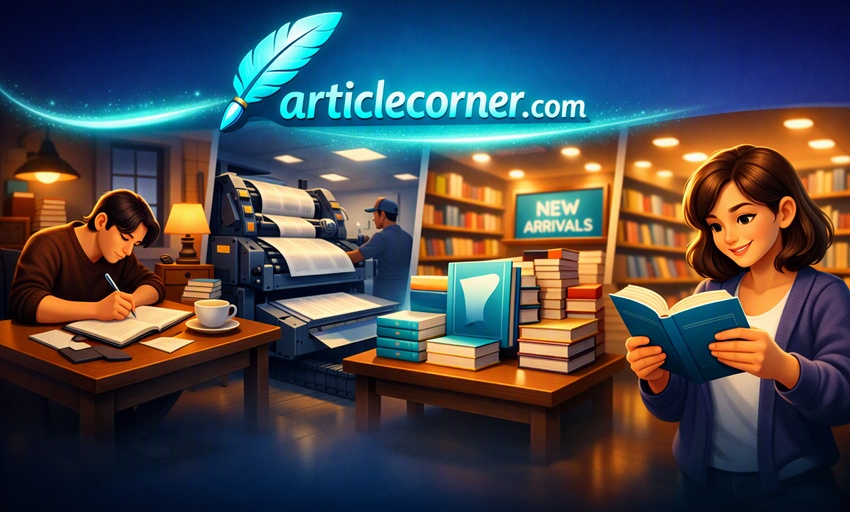
I Am a Book. Let Me Tell You My Journey
Hello. I am a book.
You may have seen me sitting quietly on a shelf. You may have touched my cover, turned my pages, or wondered about the story hidden inside me. But my real journey did not begin on that shelf.
It started inside someone's mind.
One day, a writer had an idea. It may have been a simple question, a dream, a memory, or a story that needed to be told. That small thought slowly grew and became words. Those words became sentences, and those sentences became the first pieces of me.
My writer spent many hours thinking, researching, writing, and sometimes rewriting. Every page carries a little part of that person's imagination and effort.
Then one day, I was finally ready.
I was no longer just an idea. I became a digital file filled with words, waiting for the moment when I would become a real book.
My First Meeting with the Printing Press
My journey continued when I arrived at the printing house.
Inside, I met huge machines waiting to bring me to life. Their purpose was simple. They would transform my words into something people could hold.
First, my pages were carefully arranged. Every sentence, every letter, and every detail was checked.
Then the machines started working.
Ink touched paper for the first time.
I saw myself becoming real.
I was no longer only thoughts on a screen. I had pages, a shape, and a physical presence.
I had become a book.
Creating My Pages
Large sheets of paper were printed, cut, folded, and carefully organized.
Each page found its place. Every detail mattered because even a small mistake could change the reader's experience.
Some of my friends were born with beautiful hard covers. Others received soft covers that made them easier to carry.
When my cover was completed, I received my own identity.
People often see a cover before they discover the world inside.
My Journey to the Bookstore
After printing was finished, I was carefully packed.
There were many books like me, each carrying a different story.
We were placed into boxes and began another journey.
We traveled from warehouses to bookstores, waiting for the person who would open our pages.
During the journey, I wondered:
"Who will read me?"
My New Life on the Shelf
Finally, I arrived at a bookstore.
Around me were thousands of other books. Some carried adventures. Some shared knowledge. Some spoke about science, emotions, history, or imagination.
Each of us had a different voice.
I waited patiently for someone to discover mine.
Sometimes people walked by, looked at my cover, and opened a few pages.
Those moments made me excited.
Because the greatest dream of a book is not to stay on a shelf.
It is to be read.
Meeting My Reader
Then one day, it happened.
A hand reached for me.
Maybe someone bought me because they were curious. Maybe someone chose me as a gift. Maybe someone was searching for a new idea.
At that moment, my true journey began.
Because books are not created only from paper and ink. They carry thoughts, dreams, memories, and endless possibilities.
I am a bridge between the past and the future.
Every time someone opens my pages, I begin a new life.
Every reader gives me a different meaning.
I am a book.
And my journey truly begins when someone starts reading me.

The Library Awaits You
Hello.
Do you remember me?
Let me remind you.
I am a library.
There was a time when every door that opened brought in not only people, but also dreams. Children searched for their future among my shelves. Young people looked for answers in my pages. Older visitors returned to the memories they had almost forgotten.
Now I spend most of my days in silence. Thousands of stories are still waiting on my shelves, but fewer footsteps come to listen.
It was never the books that left me.
It was the people who forgot me.
Even so, I hold no bitterness.
Because I know that sometimes people lose themselves in the noise of life. Their hearts grow tired. Their minds never seem to rest. They forget where they truly belong.
When that day comes, open my door.
I will give you more than a book.
I will share my silence with you.
And perhaps, with the turn of a single page, you will find the person you have been searching for all along.
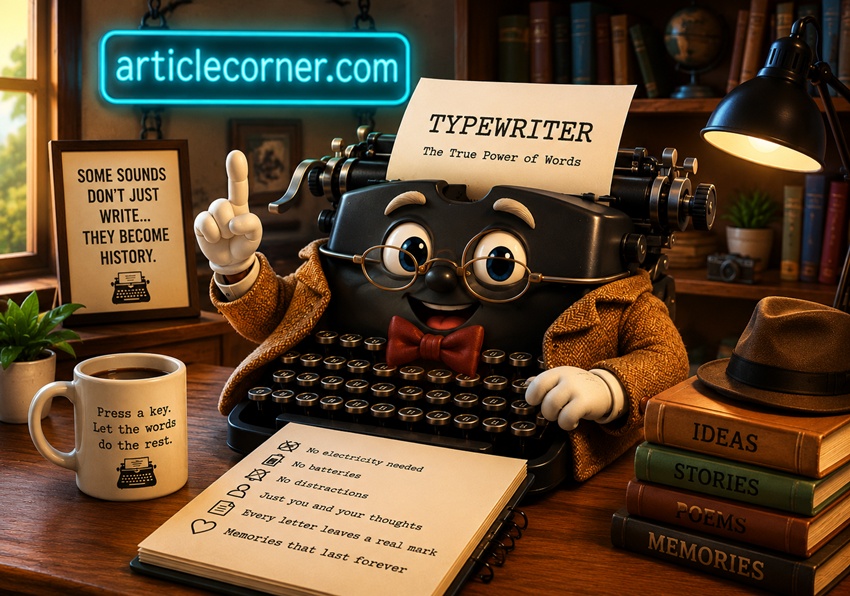
TYPEWRITER - The True Power of Words
A single idea can change the world.
But first, it must be written.
That is why the typewriter exists.
It does not need electricity.
It does not wait to be charged.
It never distracts you with notifications.
It simply listens to you and your thoughts.
Every key you press leaves more than a letter on the page.
It leaves your determination.
Every line becomes a lasting mark you can always return to.
Years may pass, yet the letters, stories, poems, and memories you write still carry the same emotion.
A typewriter is not just a writing machine.
It is the quiet companion of writers, journalists, poets, teachers, and everyone who dares to dream.
Computers may be faster today.
But no screen can capture the rhythm and soul of a typewriter.
Because some sounds do more than write.
They become history.
TYPEWRITER: The writing machine that makes your thoughts timeless.
Press a key. Let the words do the rest.
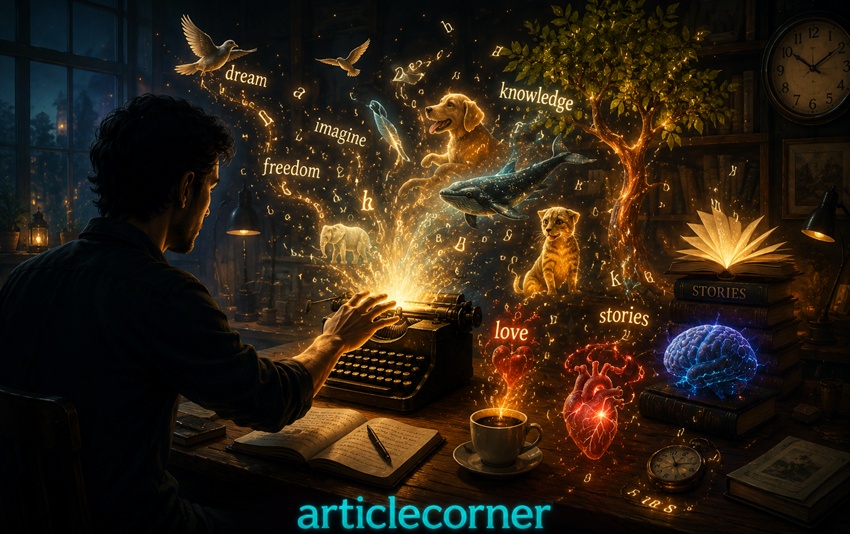
The Man Who Makes Words Dance
There is someone among us.
Not everyone knows him.
And those who do rarely speak his name.
Most people simply call him **The Man Who Makes Words Dance**.
He does not speak much.
He entrusts his thoughts to sentences.
Because he believes some ideas are meant to live not through voices, but through writing.
What makes him different is the way he sees the world.
He never sees a brain as just an organ.
He fills it with curiosity.
He never sees a heart as merely a muscle.
He fills it with hope, heartbreak, and courage.
In his writing, an old typewriter is never just a machine.
It becomes a quiet witness, whispering the stories humanity is slowly forgetting.
A bookshelf knows how to wait.
A cup of coffee listens to thoughts.
A tree teaches patience.
A bridge connects ideas before it connects people.
A streetlamp keeps lonely souls company through the night.
Animals are never just living creatures.
They become silent teachers of loyalty, freedom, courage, curiosity, and love.
Perhaps that is why his writing is not simply read.
It is felt.
Because he believes words carry more than meaning.
They carry a soul.
Some say you can find traces of him in every article on ArticleCorner.
Sometimes in a single sentence.
Sometimes at the exact moment an ordinary object begins telling you a story you never expected to hear.
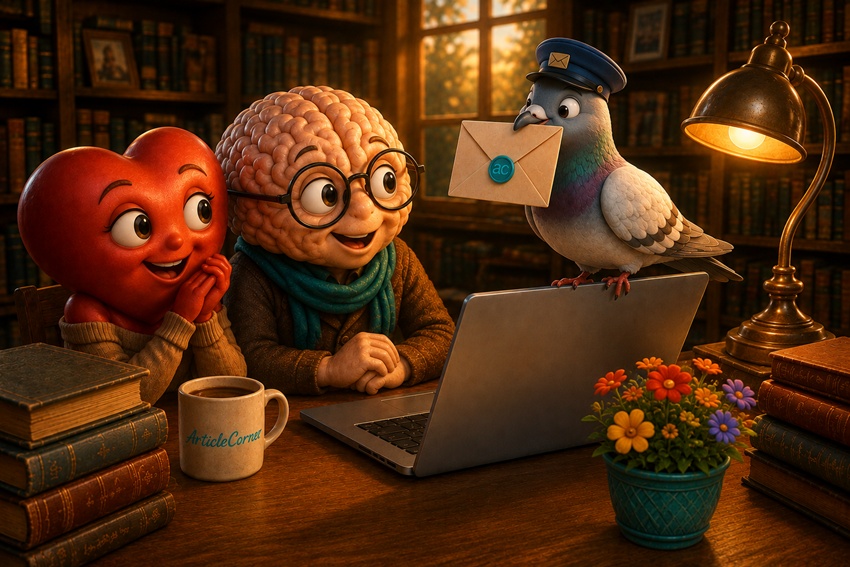
A Letter Worth Sharing
Every once in a while, a letter arrives that is simply too meaningful to keep to ourselves.
Today, we are honored to share a heartfelt letter sent to info@articlecorner.com by two familiar friends, Heart and Brain.
Here is the thank-you message from my Brain and Heart:
Dear ArticleCorner Writer,
Thank you for giving us a place among your stories.
We may be just a Brain and a Heart, but together we represent something every great article needs: clear thinking and genuine feeling. Your pages remind readers that knowledge becomes meaningful when it is guided by wisdom, and ideas become unforgettable when they touch the heart.
Thank you for believing that both logic and emotion deserve a voice.
We are honored to be part of the ArticleCorner family, where every article inspires curiosity, every story encourages reflection, and every reader is invited to see the world from a new perspective.
Please keep writing, inspiring, and bringing people together through the power of words.
With gratitude,
❤️ Heart & 🧠 Brain
ArticleCorner.com is a place where ideas begin in the mind and words are shaped by the heart. We think with the brain and write from the heart.

ArticleCorner — Where Articles and Stories Come Alive
Here, an article is more than words on a page. It can be a question, a discovery, a memory, a different way of looking at the world.
Explore thoughtful articles about history, science, technology, nature, people, philosophy, culture, and everyday life.
Then step into our stories, where imagination has no limits and ordinary moments can become extraordinary journeys.
Some articles make you think.
Some stories make you dream.
Some ideas stay with you long after you finish reading.
At ArticleCorner, we believe every article has something to say and every story has somewhere to take you.
Read. Discover. Imagine.
ArticleCorner: Articles to inspire your mind. Stories to awaken your imagination.
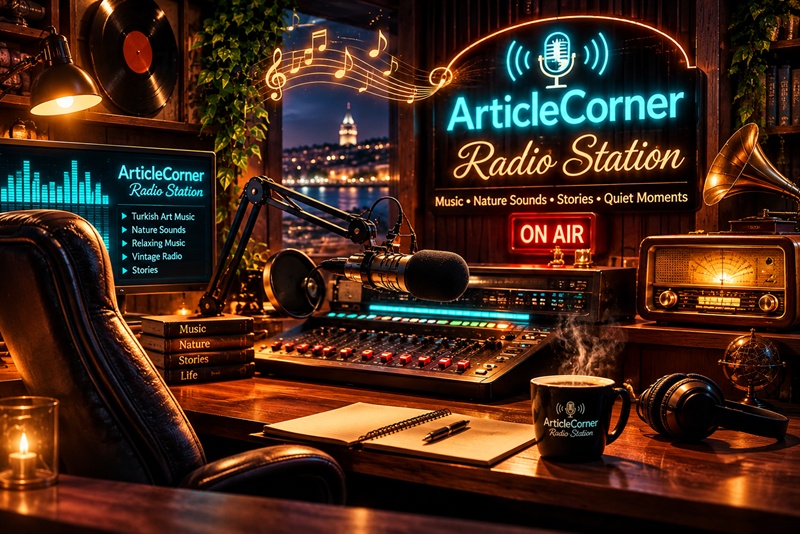
🎵 ArticleCorner Radio Station